🎯 The Challenge
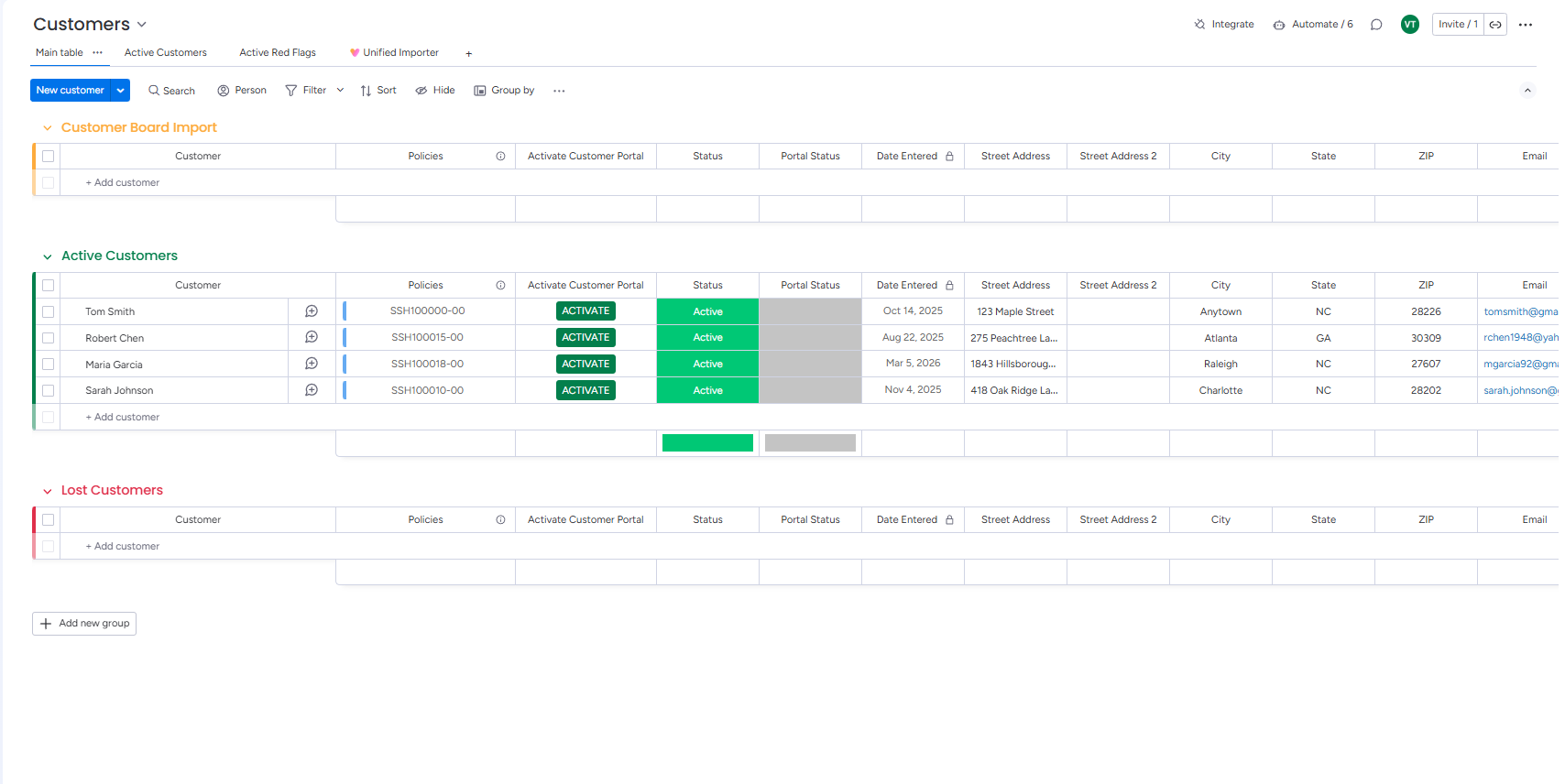
This insurer bundles a smart home security system with every home insurance policy — so every customer relationship involves not just a policy, but a physical product to ship, install, register, and activate, plus inspections, billing, claims, and annual renewals. All of it was being run out of Excel.
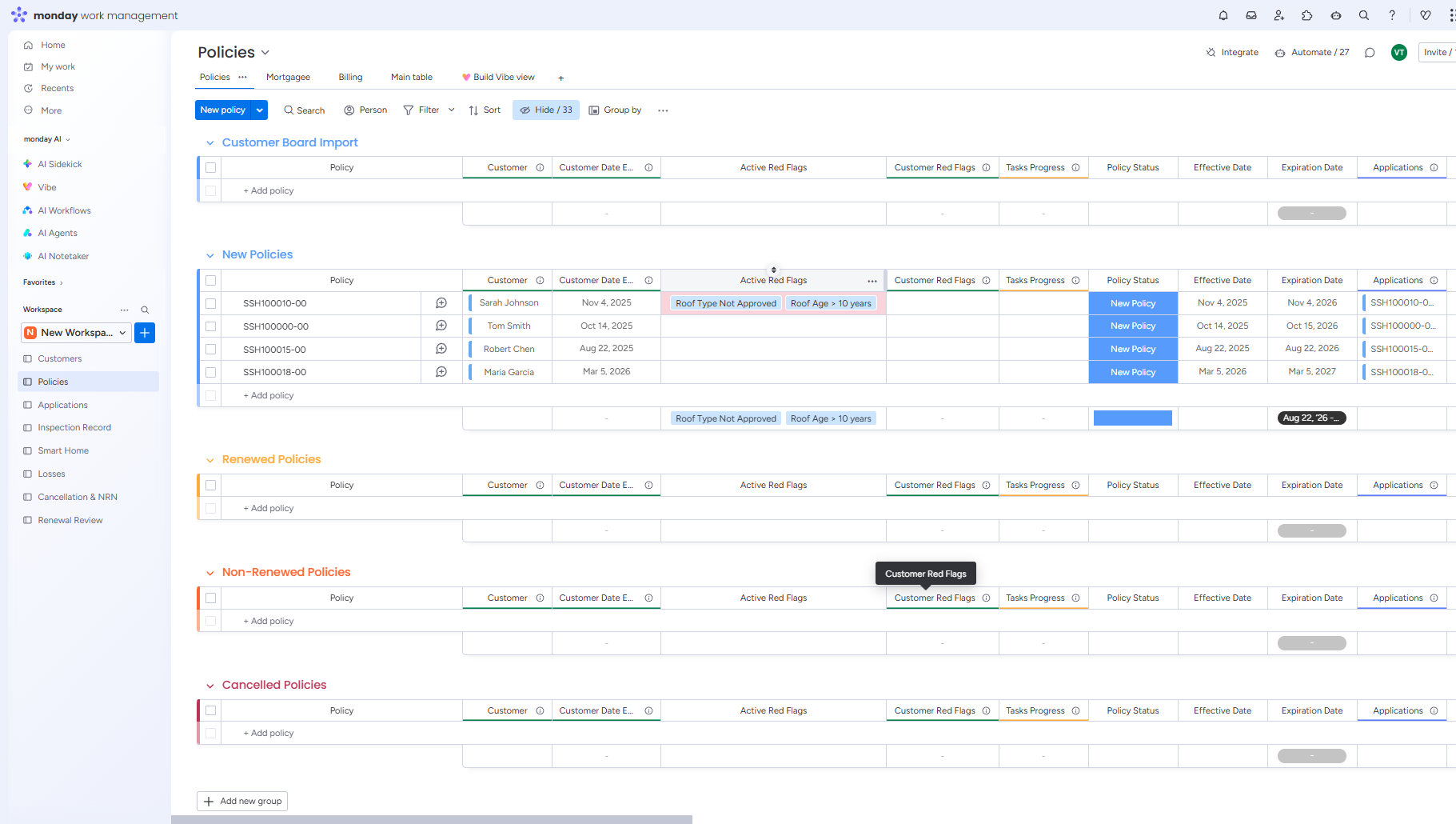
The breaking point was renewals. Every policy is valid for one year. When it expires, a new policy has to be created and signed. In Excel, the only way to record that was to duplicate the customer — creating a second, third, fourth record for the same person. Past 1,000 policies, the customer list was bloated with duplicates, reporting was unreliable, and tracking who needed what, when, became nearly impossible.
There were no reminders, no notifications, no escalations. Every deadline depended on someone remembering to check a spreadsheet. The work was slow, manual, and error-prone — and it could not scale.
- Eliminate customer duplication on renewal — one customer, many linked annual policies
- Replace manual spreadsheet tracking with automated reminders and escalations
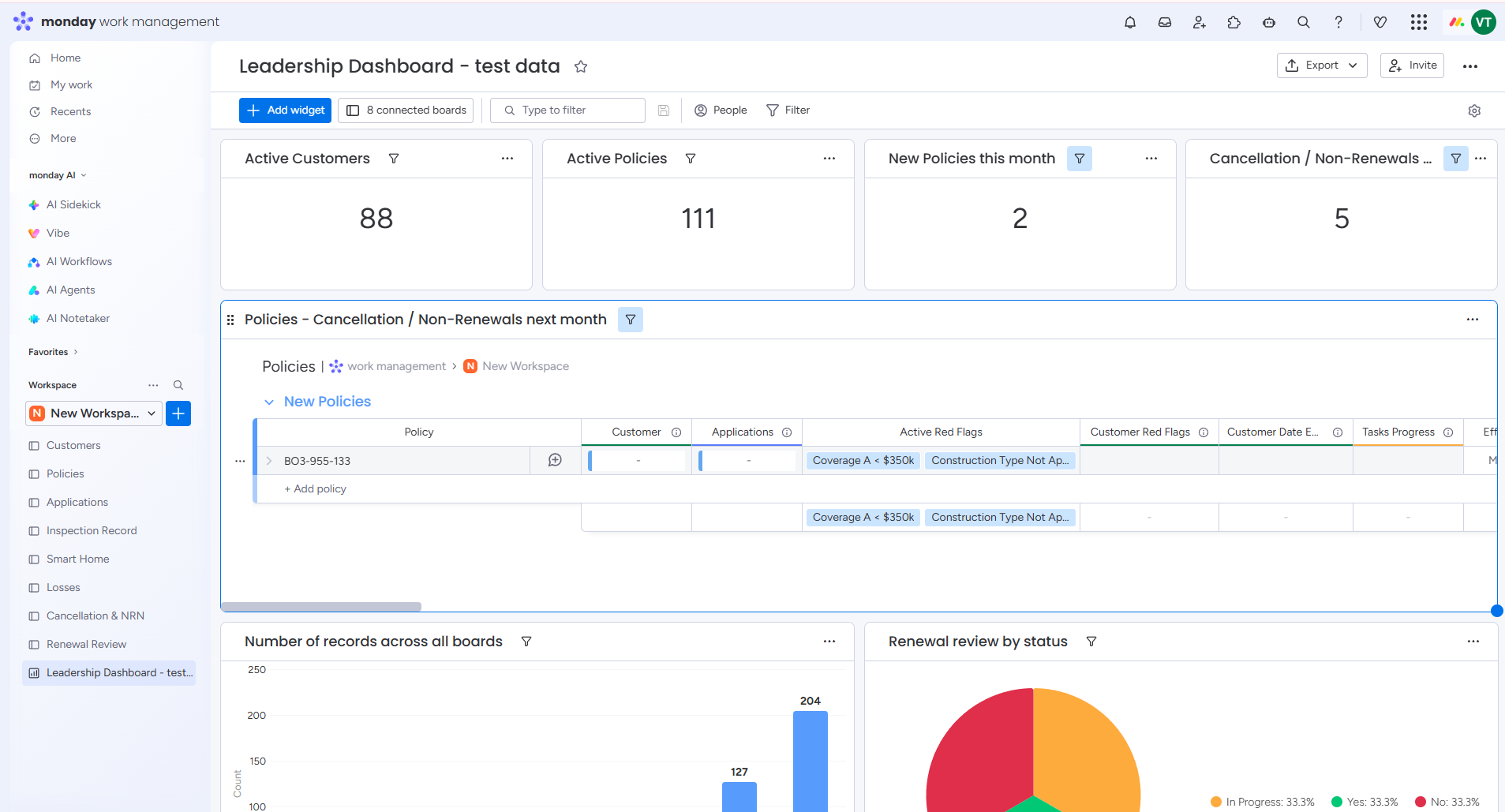
- Give every department a clear, real-time view of what needs attention
- Build something clean and scalable that Excel could never be
⚖️ Before vs After
- Each annual renewal duplicated the customer record
- Customer list bloated with duplicates
- Reporting unreliable, monitoring nearly impossible
- No reminders, notifications, or escalations
- Every deadline depended on manual checking
- New customer = data entered into 5 separate places
- Could not scale cleanly past a few hundred policies
- One customer record, many linked annual policies
- Clean data, reliable dashboards and reporting
- Automated reminders, notifications, and escalations
- Nothing depends on someone remembering
- Single-entry onboarding via a custom Monday app
- Risk parameters flagged automatically on intake
- Scales cleanly past 1,000 policies
🏗 The Architecture
Monday.com is the system of record. A custom Monday app feeds data in; Make.com orchestrates everything behind the scenes; and five external platforms each handle what they do best. The Monday Customer Item ID acts as the immutable identifier across all of them, so when emails, addresses, or policy numbers change, every record stays linked end to end.
✨ The Standout: A Custom Monday App
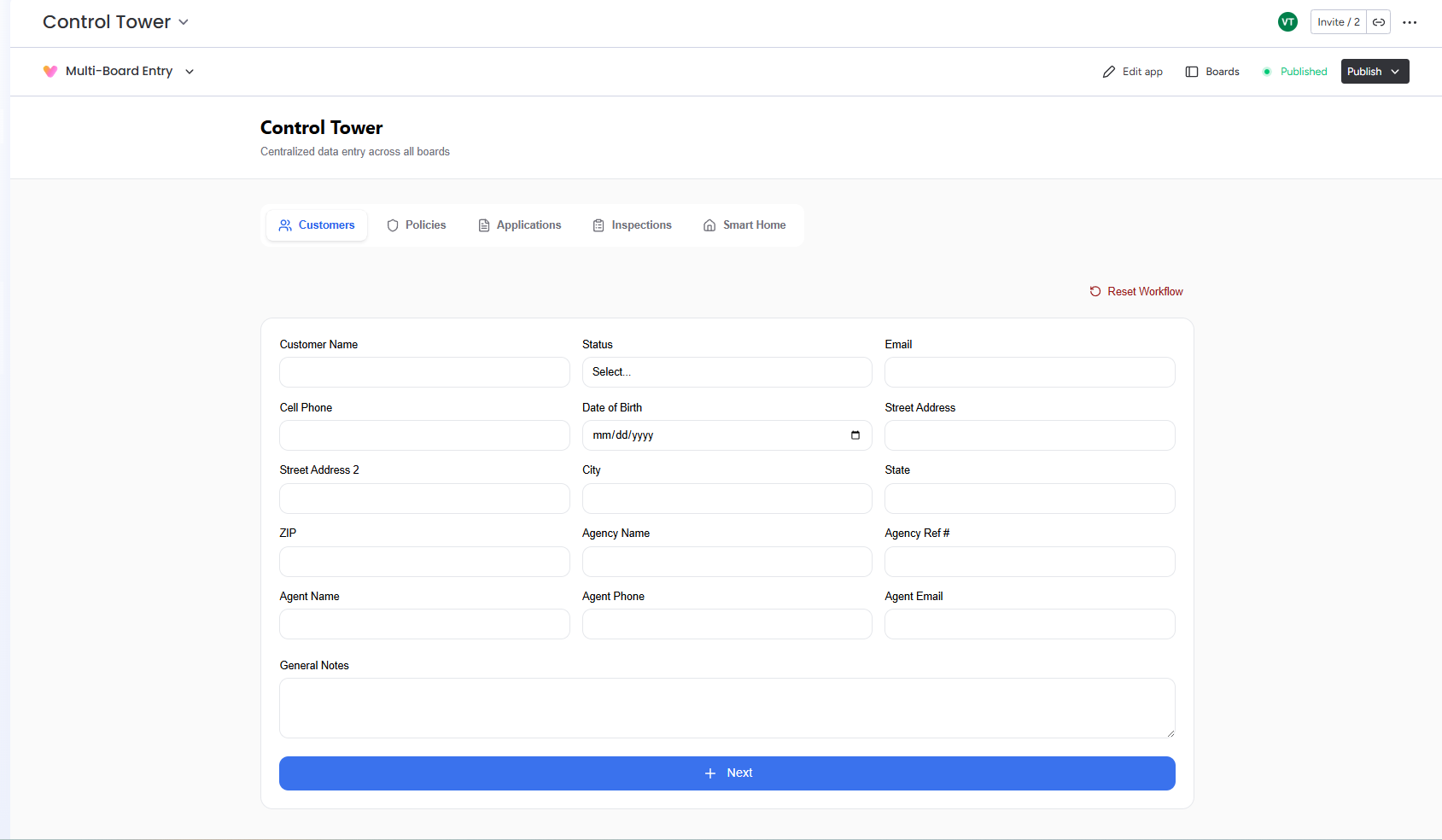
Most Monday work is board configuration and automation. This went further: a custom Monday app, built with Monday Vibe, that turns customer onboarding from a five-board chore into a single screen.
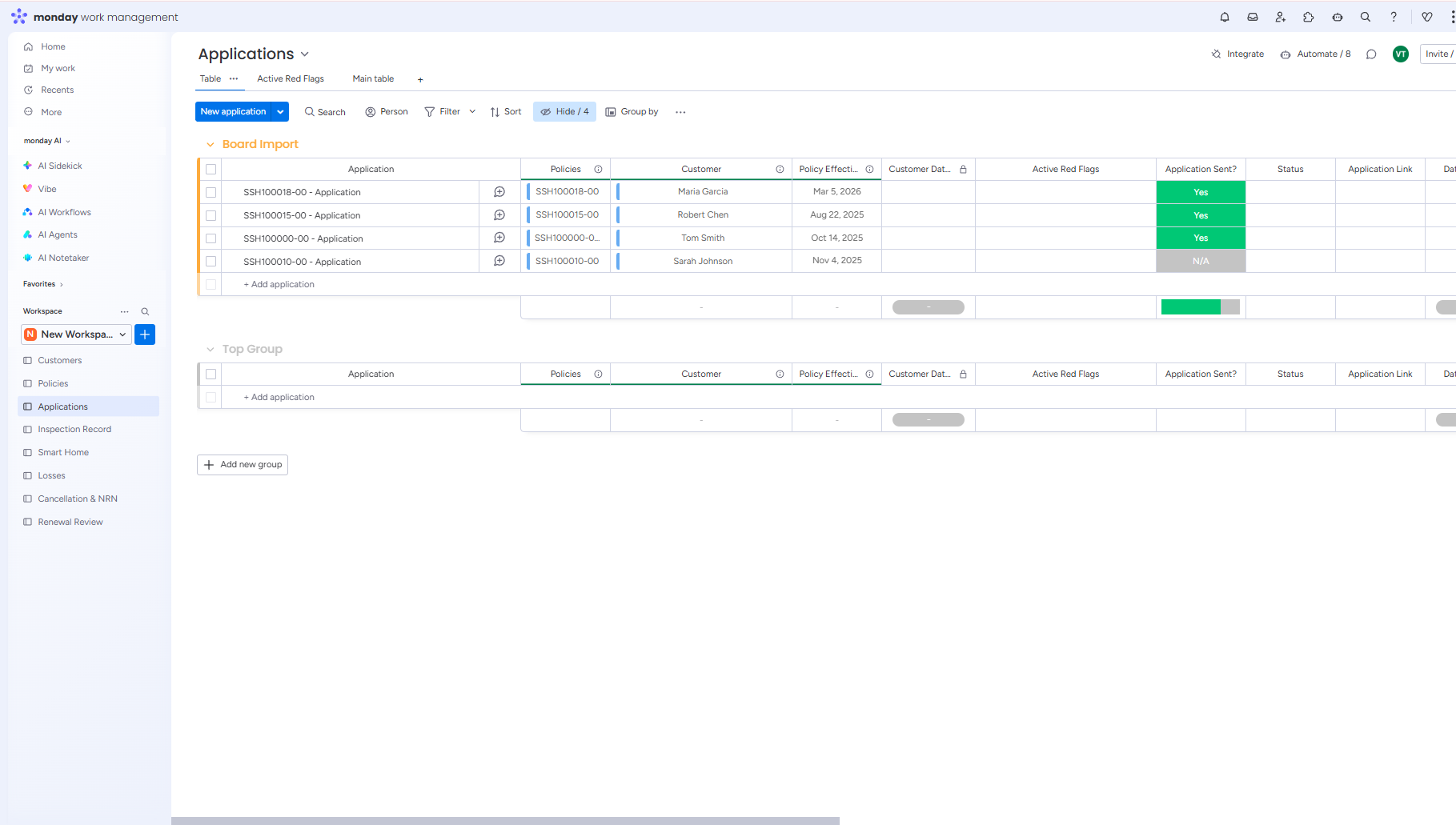
Before the app, adding a new customer meant manually entering different information into five different boards — Customers, Policies, Applications, Inspections, and Smart Home — and manually creating the links between them. Tedious, slow, and easy to get wrong.
With the app, the manager enters everything once, in one place. The app automatically distributes the records across all five boards and creates every cross-board connection in the background. No board-hopping. No manual linking. One entry, everything wired up correctly.
⚙️ Key Automations
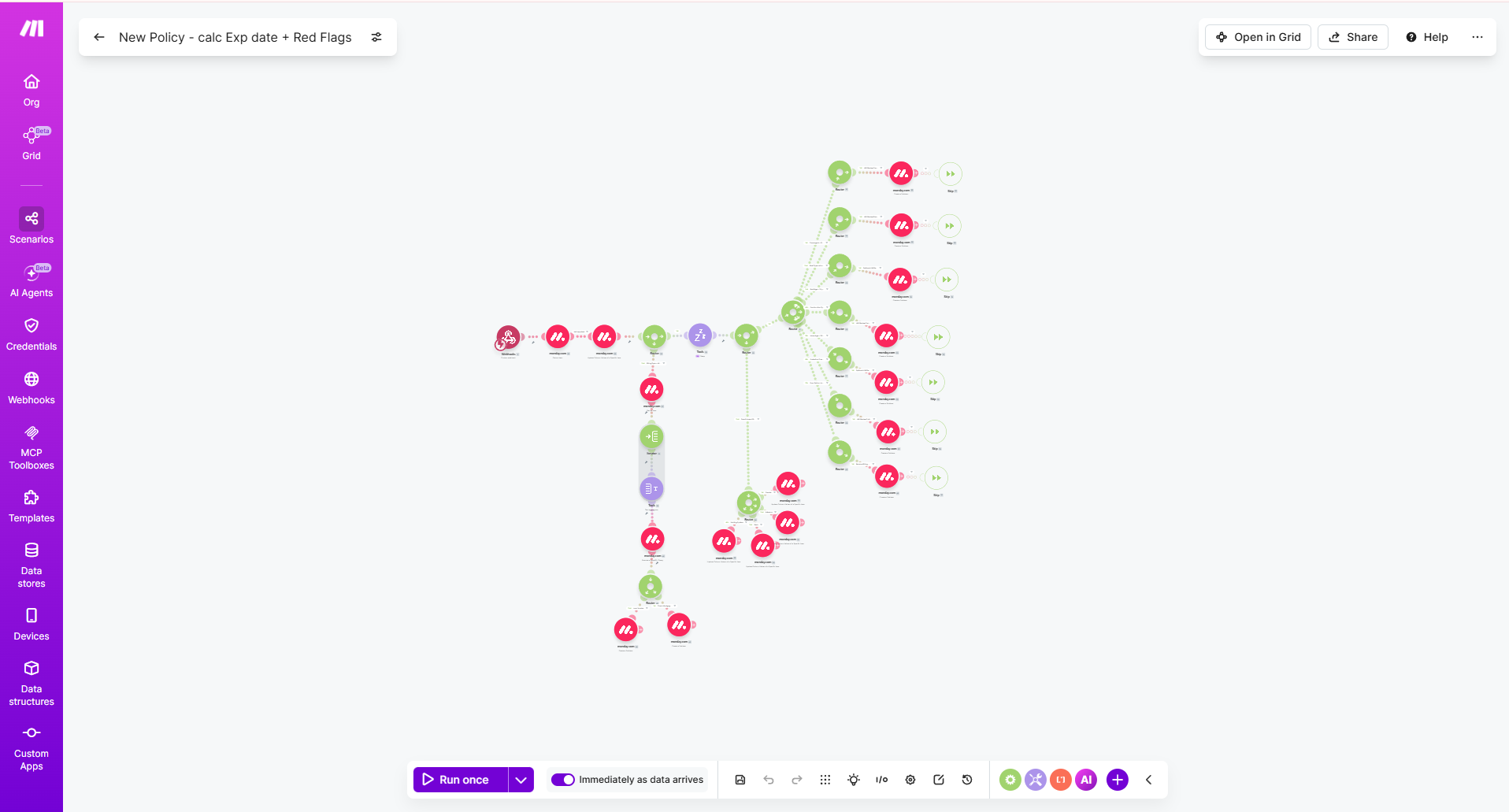
Forty-one Make scenarios drive the system. A few of the most impactful:
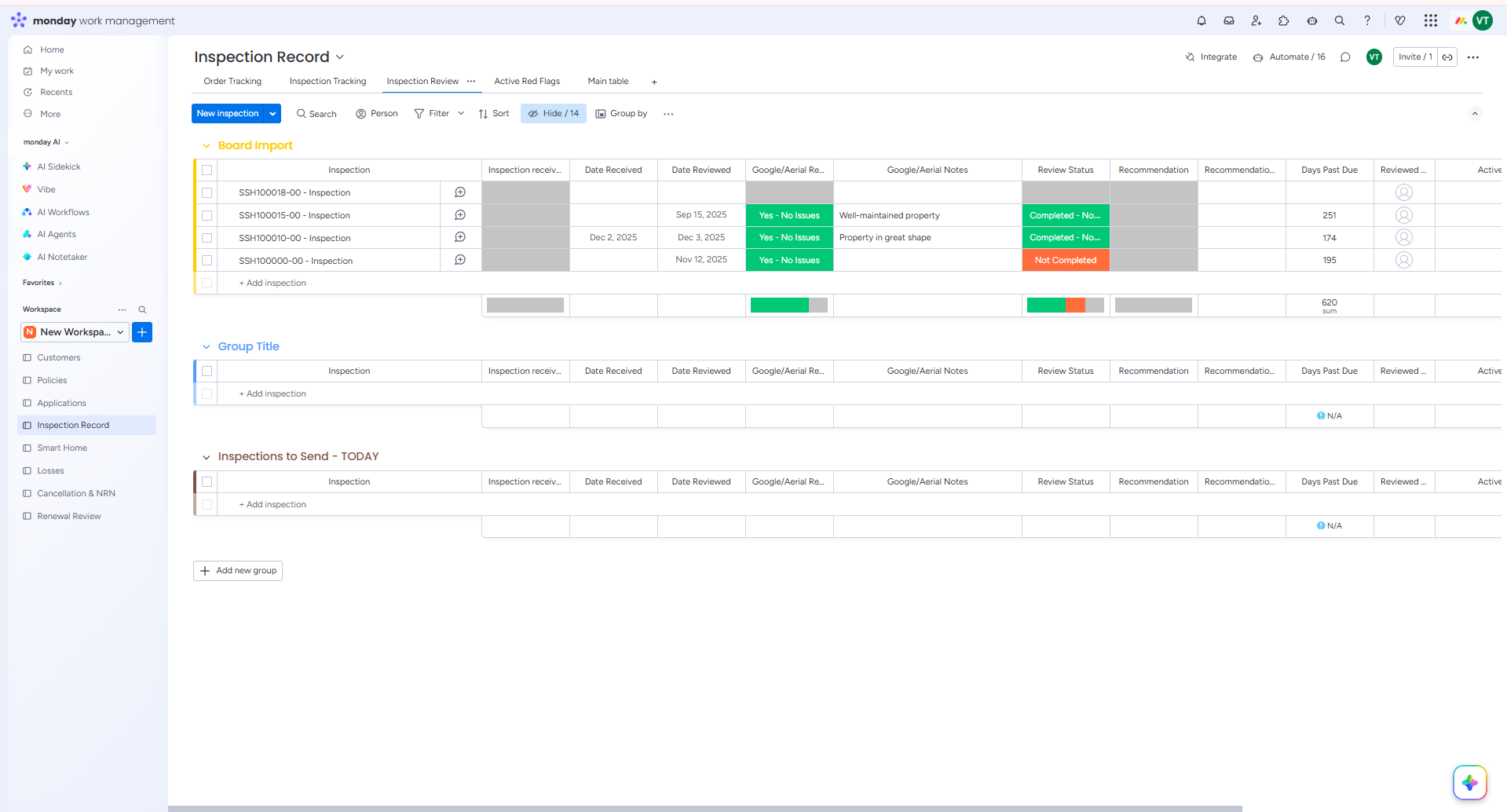
- Automatically sets each inspection's order date to the next Thursday
- Thursday morning, emails the manager the full list of inspections due that day
- Surfaces a dedicated board group so the manager can visually confirm what's due
- At 3 PM, sends a reminder if any inspection still hasn't been ordered — a safety net before the day ends
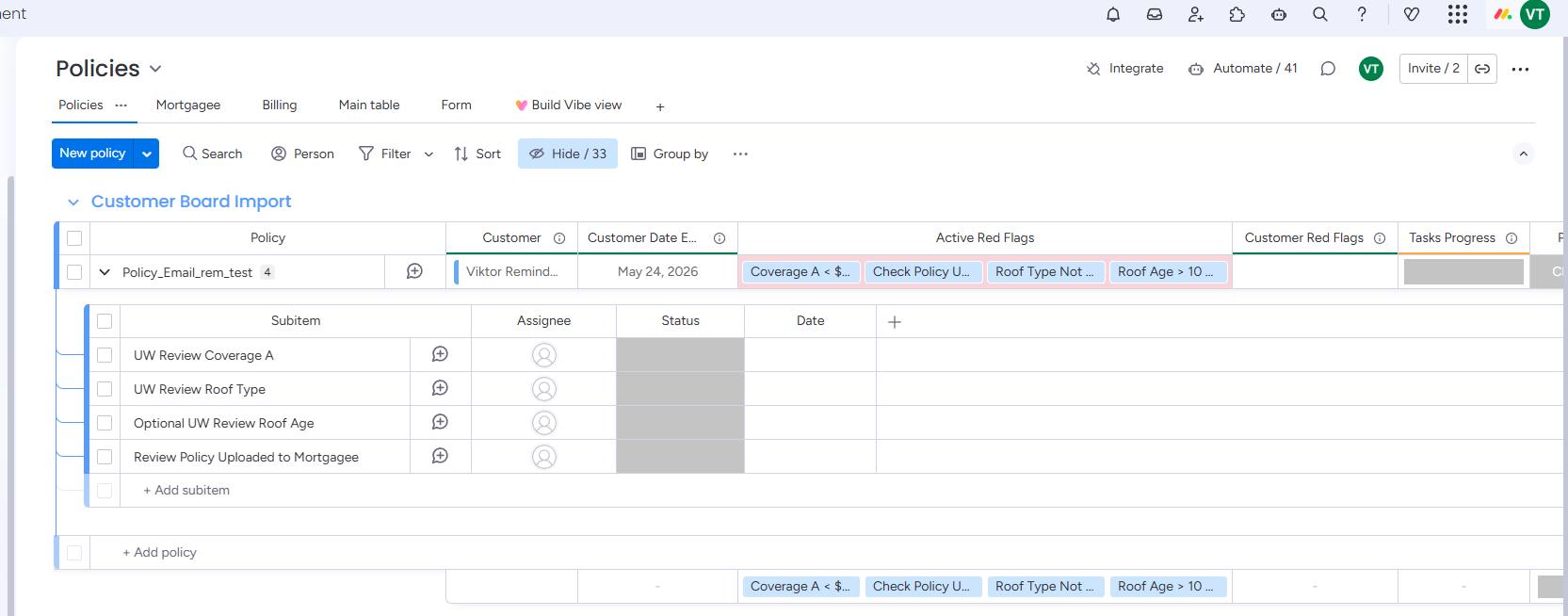
- Sets a visible Red Flag marking exactly which parameter is out of range
- Creates a subtask assigned to the right manager to review the flag and policy
- Automatically removes the Red Flag once that subtask is marked complete
🔗 The Smart-Home Fulfillment Lifecycle
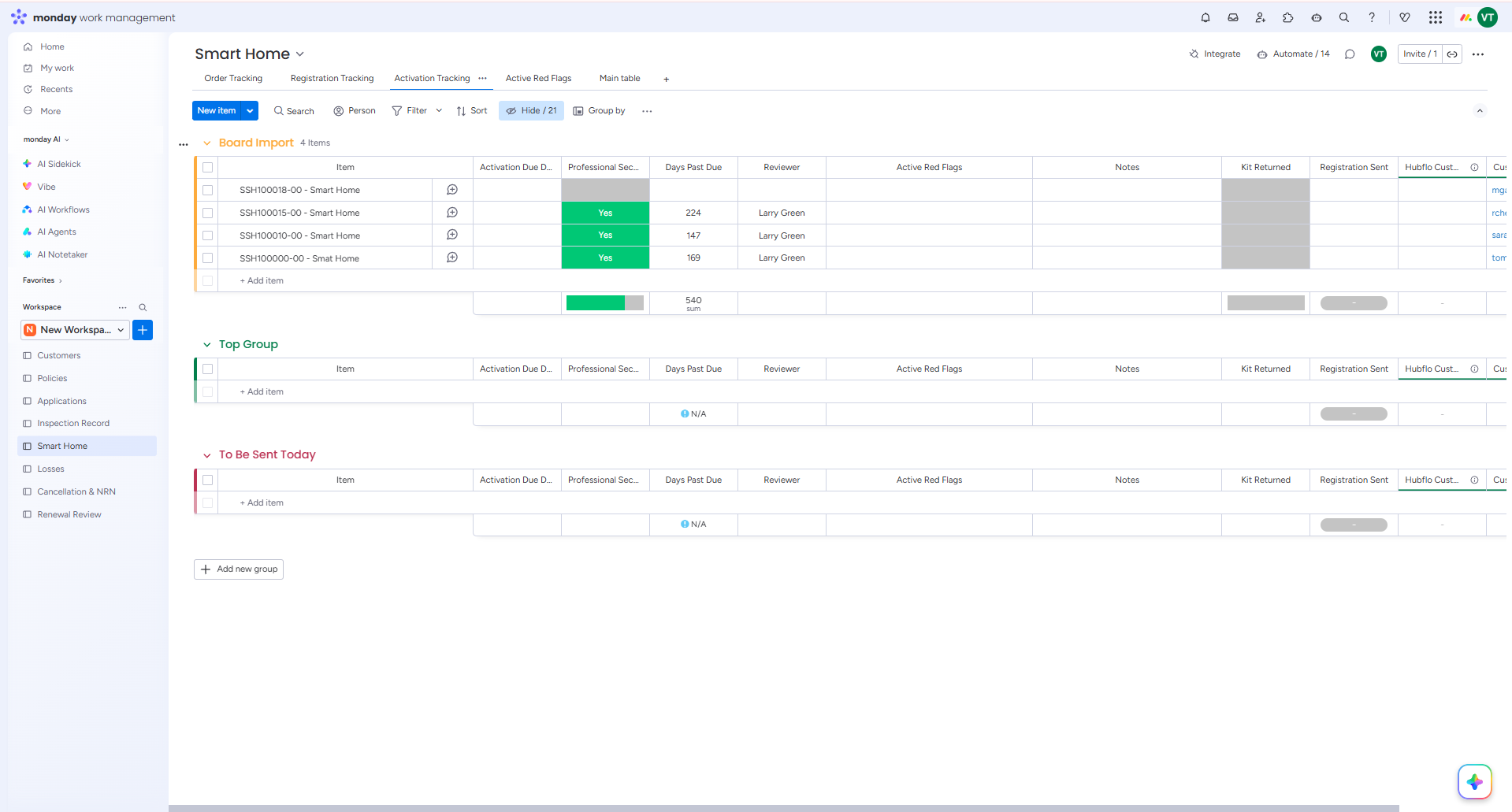
One example of an end-to-end tracked workflow: the journey of the security kit that ships with every policy, with SLA gates monitored at each step.
📈 Results & Impact
- The renewal problem is solved — one customer, many linked policies, no more duplicate records bloating the data.
- Nothing falls through the cracks — inspections, due dates, SLAs, and risk flags are all driven by automation, not memory.
- Onboarding collapsed to a single entry — the custom Vibe app replaced manual entry across five boards.
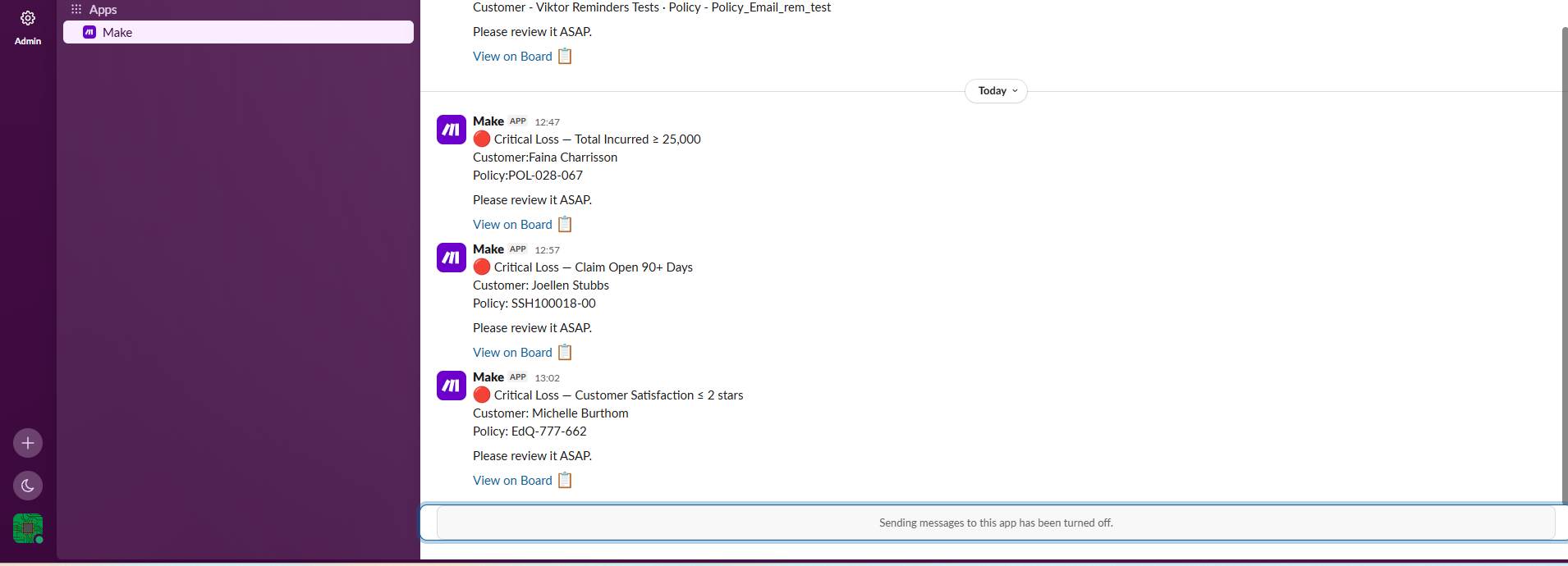
- Risk caught at intake — out-of-range parameters are flagged and routed to a manager automatically.
- Clean, scalable, and reportable — the biggest win. With this volume of automation and structure, a clean, scalable system was simply impossible in Excel. Now it runs 1,000+ policies and keeps going.
🛠 Tech & Stack
🖼 Inside the System
Screenshots from the build (test data, no real customer information).